Archives for July 2009

Why do we continue to grow grass seed in Oregon?

Why Do We Grow Grass Seed?growfoodnotlawns
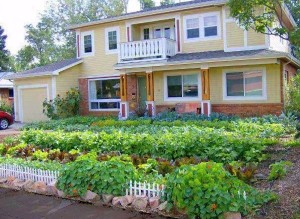


For years I have been encouraging people to remove their lawns and plant food instead. As the economy continues to sour people are growing more of their own food, but for a long while I’ve been wondering about Oregon as a whole, and what we grow. After watching Food,Inc., I was again reminded about our State’s food production system, or lack thereof. The soil of the Willamette Valley is considered some of the best farming soil in the world – and in it we mostly grow grass seed and Christmas trees.

As the article “Bean Man” in the Winter 2009 issue of Edible Portland points out “Today 95% of what’s grown in the Willamette Valley is non-edible”.

Ellen Jackson writes: “As recently as 50 years ago, the assortment of fruits, vegetables, and grains produced in the valley provided the region with the means to feed itself, an important measure of social and economic stability. The once robust regional food system has floundered in favor of planting profitable non-edible crops like fescue, rye grass seed, and Christmas trees”

Beyond the questions raised by groups like Food Not Lawns about how growing grass leads to pesticide use and pollution of our waterways there’s the question of grass and allergies. During the grass cutting season many complain of a constant state of sneezing, headaches and other symptoms, and the experience seems to worsen over the years. This is great news for the makers of anti-allergy medicines, but why are we willing to grow something that people are allergic to?

Food Security. Then there’s the question of peak oil. If it’s true that we’re running out of oil, then it behooves us to start growing more of our food closer to home rather than paying to ship it from far away. In this regard, Jackson writes:

“Changing agricultural philosophies over time has meant a loss of experience and expertise in growing beans, grains, and other valuable food crops in the valley, which is two generations deep in grass seed farmers, many of whom are at least 60 years old. The Bean and Grain project recognizes that reclaiming the region’s past agricultural knowledge and reviving previous growing techniques are critical steps to breathing new life into the regional food system. Converting large parcels of grass seed acreage into plots for organic beans, grains, and edible seeds is the next order of business.”

I think we should follow the lead of the Bean and Grain project which is the work of farmer Harry MacCormack:

“The Southern Willamette Valley Bean and Grain Project is a step by step strategy to rebuild the local food system by increasing the quantity and diversity of food crops that are grown in the valley, evaluating deficiencies in the food system infrastructure, building buyer/seller relationships for locally grown food, incorporating the culture of community into the fabric of the food system, and compiling resources on organic and sustainable agricultural practices specific to this region. As the name of the project implies, central to the task is stimulating the cultivation and local marketing of organically grown beans and grains to provide a foundation for year-round food resources in the valley.”

As much as I’ve appreciated the Oregonian’s support for an end to grass-seed field burning during this legislative session, I think the real issue is growing grass-seed in the first place. I look forward to a healthy state-wide discussion of how our rich farmland is used and what makes sense long-term as we take into consideration changing fuel realities, global climate change and the need to strengthen our local food supply.

Oregon’s number 2 crop, Christmas trees, is also a crop that has a lot of problems associated with it – pesticide use (local watershed pollution), shipping trees in refrigerated trucks around the country, the carbon sequestration that is lost when the trees are harvested, erosion, the costs to municipalities to discard the trees (landfills…). This is another crop that needs a look at going forward. Considering that the planet is heating up, we might do well to pay Christmas tree farmers to just let the trees grow rather than cut them down as this article in today’s Seattle Times suggests for federal forests.


OLCV ED

OLCV LogoAlbert Kaufman

Today I applied for the Executive Director position with OLCV.  Here is what I wrote to them:

To the members of the OLCV Search Committee <EDsearchcommittee@olcv.org> :

I am applying for the position of Executive Director for the Oregon
League of Conservation Voters.  I have a long history of environmental
and legislative activism which I think will be a perfect fit with your
organization.

For the past 15 years I have been a tireless activist on numerous
levels – neighborhood, city, state, national, and international –
engaged in a wide range of issues.  These experiences have improved my
capacity to move progressive, environmental agendas and issues
forward.  From shutting down a neighborhood medical waste incinerator
in Seattle to leading lobbying efforts for increasing funding for
international family planning in Washington, DC, I have grown as an
activist and a leader.  I bring strong writing, organizing, media
outreach, volunteer management, membership, fundraising, technical,
and speaking skills to any effort I engage in.  I am well-connected in
Oregon and the Northwest with a monthly e-letter that I send to 2,000
people as well as active Facebook, Twitter, Linked In amongst other
social networking accounts with many connections.  I consider myself
well respected in the environmental and political communities in the
Pacific Northwest.

I bring skills to the table which OLCV does not appear to be
leveraging to the extent I believe possible – yet!  Presently, social
networking is being used increasingly by individuals and organizations
to successfully get their message out, fundraise and organize.  I
believe that OLCV, as the biggest Oregon environmental group, could
exert a significantly larger influence on the State by harnessing
these technologies, and am confident I would be effective and
successful leading the organization in that direction.  I also sense
that OLCV could be grown into a much bigger entity, through
fundraising, as well as capitalizing on the large numbers of talented
people who are available at this time in history to do great work.

Most importantly, I am dedicated to the work that OLCV does.  I
believe that change can come through electing good leaders and working
with them to write and pass progressive legislation.  My hope for the
next ten years is that we will see substantial increases in
environmental legislation in this state as we most certainly face
increasing pressures of population growth, water scarcity, species
loss, pollution, and the results of decisions that were made years ago
– such as the much needed cleaning of our waterways, and removal of
dams on many rivers.  I am committed, and always have been, to healing
this planet, and to me that means working doggedly and consistently in
a positive direction with our friends and future allies – those who
have not yet come to an understanding of our position.  Relationship
building is a key factor in the important work of OLCV, and I would
make that a centerpiece of my leadership.  The work of OLCV is part of
a long effort that will take many many years to achieve, and the best
way to get there will be to build relationships that are strong and
consistent.

I look forward to speaking with you about these ideas and potential
new tools for effective advancement of OLCV’s goals, and expanding the
scope and breadth of OLCV in a personal interview.  I have enclosed my
resume for your consideration and would be glad to provide you with
references and writing samples at your request.  I look forward to
hearing from you and also wish you the best in this process.  There
are likely scores of people who would make a great candidate for this
position, and I hope you pick the best person available, as I believe
OLCV’s work is the most important in Oregon.

Sincerely,

Albert Kaufman

The Summer of 2009

Happy Summer 2009

Happy Summer – from AlbertIdeation!
Stasha's Roses


Hello, I wish for you a great summer, that life is treating you well, and that you, your friends, neighbors and family are healthy.  

I traveled to Sierraville, CA for a fantastic rebirthing workshop, recently. It was very inspiring and I intend to write more about my experience, soon. Here is a short paragraph from something that the leader, Leanord Orr, wrote:

“To practice the Presence of God means to live in a way that feels peaceful so that we feel our Divine Nature every day, making us feel loving, creative, and productive. The daily spiritual practices with earth (good diet, food mastery, and exercise); water (bathing); air (conscious breathing); fire (sitting with it); and meditation renew our divine energy.

My simple recommendation for today would be to learn more about earth, water, air and fire – I’ll say more soon 🙂

July 2nd, 2009: 5:03PM: 90 degrees – In Portland we’ve got stronger heat than normal: a good time to remind everyone to water new trees that have been planted in the last 3 years.fruit trees

  • 3 gallons 2-3 times a week is best
  • Ask your neighbors if they’ve watered their new trees, usually most people don’t mind if you water for them
  • register your tree (if it’s a fruit tree) with thePortland Fruit Tree Project or your local version – don’t have a fruit tree project for your City?
  • Drink lots of water yourself.

If you like what I do in the world and would like to support me financially, please click here to reach paypal. This is a convenient way for me to receive contributions  If you have another way you’d like to support what I do, please let me know, thanks.

In the heat people tend to sit in their cars, eat lunch, make a call, all the while idling their car.  This next piece from the City of Portland explains idling simply and kindly.  Copy, paste and distribute, por favor!

IT’S YOUR E-MISSION!

Have you ever left your vehicle idling for more than 10 seconds while waiting to pick up your child at school or while at the drive-up window at the bank? Most of us have. Here are some very good reasons to rethink this common habit:

Vehicle emissions are the largest contributing factor to air pollution. The combustion of fossil fuels releases several types of air pollutants that are detrimental to our health. These include sulfur dioxides, particulate matter, carbon monoxide and other toxins contributing to the formation of atmospheric carbon dioxide (CO2) levels.

Children are particularly vulnerable to air pollution. Children breathe 50 percent faster and inhale more air per pound of body weight than adults. Studies have shown a direct link between many respiratory diseases and pollutants found in vehicle exhaust. In fact, asthma is the third leading cause of hospitalization for children under the age of 15.

Excessive idling is expensive. Over 10 seconds of idling uses more fuel than restarting your engine. Idling for 10 minutes a day uses an average of 22 gallons of gas per year, and gets zero miles to the gallon. Excessive idling is not good for your vehicle either. It can actually damage your engine components, including cylinders, spark plugs, and exhaust systems, whereas frequent restarting has little impact on engine components like the battery and starter motor.

For the children, for yourself, and for the environment, please remember to keep your emission down and turn off your car if it isn’t moving!

1-2-3 TURN THE KEY!
All my best from the City of Roses!If you would like to meet for a rebirthing session, please let me know.

Om Namaha Shivaya: “Aum” or “Om” means “Infinite Being.”  “Shivaiya” means “Infinite Intelligence.” “Namaha” means “Infinite Manifestation.” “Aum Namaha Shivaiya” is a very high quality thought.’  **

Happy Solstice, perfect weather and good thoughts to ya!

**Leonard D. Orr, The Owner’s Manual for Human Beings, Ignorance & Wisdom
AK https://depave.orgAK in PV