What’s happening in the world of email marketing

email marketing report June 4th 2015 (updated 6.8.23)

As I prepare for my next live class on email marketing, I thought I’d share some of what I’m seeing these days in the field. I’ve been using Constant Contact for the past 15 years to send out a monthly e-letter called The Eleven. Originally, this went out to friends and family, and then, eventually, as I got more involved in teaching email marketing, I developed a few lists of people who came to my classes who have shown interest in learning more about marketing practices.  Along the way, I became a Constant Contact authorized local expert – offering regular classes on email marketing, event marketing, and social media in the Pacific Northwest. By now I’ve probably spoken to about 1,000 people and my list has grown.  Here are some of the changes I’ve seen recently in the marketing world.

First of all, email is not dead, far from it. The more media attention I see social media getting, the more I’m convinced that if you actually want to succeed in reaching people in an easy and affordable manner – you want to be building an email list of interested people.  I hear people constantly talking about building a Twitter following; an Instagram following; or getting more “likes” on their Facebook fan pages. If you’re able to pay for advertising on one or more of these platforms – then, great – you may have a chance to build up your email list.  But, honestly? Unless you either have some amazing content (beautiful photos; fantastic articles; or you’re suddenly in the media limelight for some reason and something you do is going viral) I wouldn’t put that much energy into social media. I tend to think of a fan page as a good Yellow Pages ad. There it sits – if someone searches for your business they can find you. Fantastic! And then they can come to your website, join your email list or call you. Great!  But when you post something on social media these days and you get 0.01% reach to the people who are your fans or followers – it just doesn’t seem worth it to me.

A peer asked me yesterday whether one of my fan pages, Email Marketing Guru – actually led to any new business.  I said that it used to, but even with some targeted advertising, I don’t think it’s doing me much good.  It looks good – yes, it gives me some sort of credibility that I have over 1,500 fans on a couple of fan pages.  That and $1 will buy me a cup of coffee.  If one searches on “Email Marketing Portland” my fan page comes up 3rd on Google. OK, that’s probably worth something.  But honestly, I think being able to send an email out to people who have expressed interest in what I do is so much more powerful that I really shouldn’t be spending as much time on social media as I do.

In terms of email marketing, things are shifting, too. Emails are going to mobile-friendly formats. If you’re doing email marketing and you haven’t moved to a mobile-friendly template, that’s the #1 thing I’d recommend doing. Now.  Word has it that 65% of people are reading their emails (your emails!) on their mobile devices.  So, learn about mobile-friendly templates and move to one ASAP. Second, the formats for newsletters are shrinking.  I’m seeing more and more newsletters that are a banner, a couple of sentences, a call to action, and that’s it.  Because these do well on phones. Because people’s attention spans are shrinking. So, if you haven’t tried doing a very short newsletter yet, give it a try and see what happens with your open rates and click-through rates (which are way more important, because responses to your call to action are what really counts, right?).

Thanks for reading, I think that’s a good start.  My recommendation? Stop worrying about social media and put more time into getting a robust email marketing program up and running, or strengthening what you’re already doing. If your website doesn’t have an email list sign-up form, get one. And, if you need any assistance with this, let me know. This is what I love to do – check out my Managed Care Program for an idea of the service and encouragement I offer.

Here to help.

Sincerely,

Albert Kaufman

PS – if you’d like a 2-month risk-free Constant Contact trial – click here. That’s what I use. It’s easy and worth every penny.

Try Constant Contact Free for 60 Days

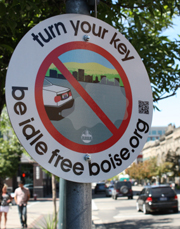
Be Idling Free

Be Idle Free Everywhere
no idling young lungs at workIT’S YOUR E-MISSION!

Have you ever left your vehicle idling for more than 10 seconds while waiting to pick up your child at school or while at the drive-up window at the bank?  Most of us have.  Here are some very good reasons to rethink this common habit:

Vehicle emissions are the largest contributing factor to air pollution.  The combustion of fossil fuels releases several types of air pollutants that are detrimental to our health.  These include sulfur dioxides, particulate matter, carbon monoxide, and other toxins contributing to the formation of atmospheric carbon dioxide (CO2) levels.

Children are particularly vulnerable to air pollution.  Children breathe 50 percent faster and inhale more air per pound of body weight than adults.  Studies have shown a direct link between many respiratory diseases and pollutants found in vehicle exhaust.  In fact, asthma is the third leading cause of hospitalization for children under the age of 15.

Excessive idling is expensive.  Over 10 seconds of idling uses more fuel than restarting your engine.  Idling for 10 minutes a day uses an average of 22 gallons of gas per year, and gets zero miles to the gallon.  Excessive idling is not good for your vehicle either.  It can actually damage your engine components, including cylinders, spark plugs, and exhaust systems, whereas frequent restarting has little impact on engine components like the battery and starter motor.

For the children, for yourself, and for the environment, please remember to keep your emission down and turn off your car if it isn’t moving!

1-2-3 TURN THE KEY!

Please join our Portland effort to change this

Here’s a suggestion for how to avoid idling – see what happens when you do things in this order:

1. Make your phone call or map out where you’re going first, then..
2. Get in the car
3. Put on seat belts
4. Turn on Car
5. Go where you’re going.

1st Article by WA Post on the uselessness of idling in the Winter and follow up by WA Post: This is why people still think they should idle their cars in winter.

Here’s a great Brochure on Anti-Idling

Some good news from Obama regarding airplanes and emissions. btw, why not military jets included?

This is just in thanks to Evan Manvel: Oregon Greenhouse Gas Reduction Toolkit: Strategy Report: OREGON SUSTAINABLE TRANSPORTATION INITIATIVE: Eco Driving PDF

Be Idle Free Boise

Oregon Department of Transportation’s EcoDrive website https://www.oregon.gov/ODOT/TD/TP/Pages/ecodrive.aspx

The American Lung Association https://www.lung.org/healthy-air/school/protecting-air-at-school/ government.html

US Environmental Protection Agency’s Clean School Bus Campaign https://www.epa.gov/cleandiesel/sector-programs/csb-overview.htm

US Environmental Protection Agency’s Idle Free School Zones website https://www2.epa.gov/region8/idle-free-schools

US Department of Energy, Idle Reduction website https://www.afdc.energy.gov/conserve/idle_reduction_basics.html

5.25.24 – OEC Article which makes everything very clear.

Farm My Yard: Resources

Farm My Yard

Farm My Yard Resources

  1. Food Not Lawns: How to Turn Your Yard into a Garden and Your Neighborhood into a Community
    Start here!
  2. GrowPortland – Empowering our community to grow healthy food.
  3. FoodHub – FoodHub gathers professional food buyers, wholesale producers, distributors and industry suppliers in one dynamic community.
  4. Friends of Family Farmers Promoting and Protecting Socially Responsible Farming in Oregon.
  5. SPIN-Farming https://www.spinfarming.com/ Create an income-producing farm in your (or someone else’s) yard.
  6. FoodPool in Oakland, CA – FB page:  At FoodPool, we see the “problem” of excess garden abundance as an opportunity! It is an opportunity to help provide people in need with fresh, ripe, homegrown produce. The only obstacle lies in linking growers with their hungry neighbors. Our answer is “FoodPooling.”
  7. Seattle Urban Farm Company – started early in the spring of 2007. It was created find the answer to one simple question: Does anybody need help setting up a vegetable garden? Great resources, and interesting looking book on backyard farming.
  8. iFarm: a great resource for people looking for farmland and those wishing to offer farmland in Oregon!
  9. Rogue Farm Corps also, blog post on this site @ here
  10. Farm My Yard Facebook Page

Hawthorne Blvd: Three Stories for a Happy Ending

Bagdad TheaterGuest Contribution by Jeff Cole of the Sunnyside Neighborhood, Portland, Oregon

Hawthorne Blvd: Three Stories for a Happy Ending

Close in Southeast Portland neighborhoods have this thing that urban planners love to talk about: a sense of place. I can’t help but feel a provincial pride in my own still somewhat scruffy Sunnyside. It’s been over a century in the making after all: not exactly urban, nor suburban – in no way prim, proper, or polished. A bit bohemian without being overt about it. You know where you are; here.

Yet, if our city’s planners and developers have their way – it may well be undone in a few short years. These are no idle fears – the behemoth across from Safeway (SE 27th/Hawthorne) and the four-story tragedy next to ¿Por Que No? (soon to be ¿Por Que?) is proof Sunnyside’s sense of place – and indeed the entire Hawthorne District – is on the auction block.

It’s not that so many monumental wonders line much of Hawthorne – glorious Baghdad theatre palace aside. What charms me is the collective mercantilism of Hawthorne’s modest commercial storefronts – an authentic, living vestige that attests to the historical nature of this corridor and others like Belmont and Division.

Hawthorne hosts the small businesses I love and use day in and day out – and others I just enjoy having there. From cat food to dog baths. Beads, yarns, and greeting cards. Fashions are new, handmade, and recycled. Herbs and perfumeries. Pipes, vapor cigs, and growlers. Vintage furniture across from retro tattoos. Powell’s and specialty bookstores. Restaurants and close-by grocery stores.

And it is the ease by which Hawthorne Blvd. could lose so much of this – replaced by a parade of Vanilla Deluxe four-six story mixed-used boxes a la North Williams – that is causing so much unease. Higher density corridors with greater populations drive up commercial rents that limit the types of businesses that can operate profitably. It’s worth noting that new mixed-used corridors like N. Williams St. have a comparatively limited expression of commercial typologies.

As our city plans for future growth in Southeast Portland, it’s worth noting we’re not talking about an old railroad yard morphing into the Pearl nor long gone shipyards now sprouting high rises. We have few large vacant lots like N. Williams St. People already live here; many have for quite some time.

So Memo to Powers That Be: in case you don’t realize it when you look west from Mt. Tabor there’s a wealth of moderately dense and immensely livable neighborhoods amongst the sea of trees. Our success is not the product of Urban Renewal Areas or generous public investments – our story is the cumulative uplift achieved by numerous small businesses and homeowners.

Historical Axis

Drawing lines: that’s the foundation of local SE PDX history. There’s a stone set yonder in Portland’s West Hills just off Skyline Blvd. – the survey marker originally staked in 1851 defines an east-west “Baseline” that shoots arrows straight all the way to Oregon’s eastern border. In Southeast Portland, this “baseline” is Stark St. – along which lies the Lone Fir Cemetery where James Hawthorne himself rests in peace.

A little over a hundred years later planners drew another line – to bulldoze a freeway eastward through 1800 buildings. The Mt. Hood Freeway would have pummeled Division St (named so being one mile of due south Stark St.) until about 40th St before jutting south to destroy Powell Blvd. Southeast Portland neighborhoods fought back in the early 1970’s – and won. The resulting solution – today’s MAX line running from Gateway into Downtown along the already existing transit corridor of I84 & the Union Pacific railroad is proof paths can be changed.

These days one senses an unanswered question: is it time for close-in SE PDX neighborhoods to rise up again? The bulldozers are back flattening hundred-year-old homes framed in old-growth wood. The Mt. Hood Freeway has returned – deconstructed into a wider blight – as over 1800 structures are demolished every four years in Portland. And like the freeway that thankfully never was – we are told this must be in the name of progress.

The Sky is Not the Limit

For decades zoning along Hawthorne Blvd. and many historical corridors has stated a forty-five-foot buildable height limit. In terms of property ownership – this is called a “right” – a kind of sacred promise that directly impacts land values.

Until the turn of the century – only buildings with specialized uses neared the 45-foot height limit: the soaring Bagdad roof, or church steeples, or schools. Even during the late 1990s, new commercial storefronts on Hawthorne were one or two stories.

One might argue – in terms of the historical relationship between these corridors and the abutting residential housing – that code never intended the construction of solid (often block long) 4-6 story volumetric buildings. That is to say – the implied conditional use at the time involved new construction typically less than half the height limit in shorter segments of frontage.

Permitted uses along Hawthorne have become more restrictive over time. Unless grand-parented in, new oil changing operations, car repair shops, or drive-thru lanes cannot be built as freely as yesterday. That’s how the once proposed McDonalds drive-thru at 34th & Hawthorne (where Dosha stands today) was stopped in its tracks.

One might argue, if permitted usage of properties can be redefined, then usage, as expressed through maximum height limits, can be revisited, too. Lower height limits could be zoned along SE Hawthorne Blvd. and streets like Belmont and Division.

An Equitable Solution

Given what’s now being built on our historical corridors has been whittled down to the sole typology of McPortland Mixed Use, there are numerous advantages to instituting a 38 foot – or three-story – height limit on Hawthorne and other historical corridors:

Because a 4-story mixed-use project houses about 50% more residential units than a 3-story version the impacts on neighborhood fabric and infrastructure are dramatically higher with the former. The 3-story limit still allows increased density, and creates ground floor commercial space, while treading more respectfully.
The 3-story height imposes far less visual impact on surrounding single-family and garden apartment neighborhoods.
Solar access: even on Hawthorne Blvd. a 4-story building throws a wintertime shadow that reaches across the street up to the first story. Since SE PDX corridors run primarily east-west – the cumulative impact of taller buildings means a total loss of direct sunlight for many months. (Other popular streets like NW 23rd and N.Mississippi run north-south and avoid this problem to some degree).
Even with a 3-story limit, higher buildings could be allowed through a carefully controlled bonus height system requiring the builder to provide firm deliverables with community benefit based on neighborhood approval.

More Growth Where It’s Needed

Instead of encouraging excessive growth with the risk of damaging historical and vibrant neighborhoods, there are areas where more rapid development might be appropriate. Portland has already invested heavily in preparing the Gateway district for growth – which can draw on Urban Renewal Area funds. By contrast, close-in Southeast neighborhoods have limited access to resources needed to mitigate the impacts of higher density. Ironically, one of the strongest arguments for developing Gateway is its transit-rich location, especially in terms of light rail – a direct result of shutting down the once planned Mt. Hood Freeway.

Whether some of Portland’s neighborhoods are vibrant in the long-haul may well hinge on providing more than a parade of formulaic four-six story mixed-use buildings punctuated only by supermarkets. The engaging architectural vocabulary that once expressed itself through iconic neighborhood auditoriums and ballrooms, churches and synagogues, bungalows and garden apartments, and other single-use structures appears to have no current equivalent. Yet apparently it is a quality much sought after in many close-in Portland districts now experiencing bidding wars on a limited quantity of for-sale single-family houses. Perhaps it’s that sense of place that buyers are seeking so very much – somewhere that doesn’t seem like anywhere.